Amanda Callenberg

Amanda Callenberg - Stress Induced IBS Nutritionist - BANT & CNHC Registered
4.8
⭐⭐⭐⭐⭐ Google Rated

Stress-Induced IBS: When Stress or Anxiety Triggers Your Symptoms

If your IBS symptoms flare during stress or overwhelm, you may be in a cycle that diet changes alone cannot fully resolve.

✔ IBS caused by stress ✔ IBS triggered by anxiety ✔ Stress-related IBS flare-ups

Free, confidential, and no pressure.
Online appointments available. London-based, work with clients worldwide.

“I work primarily with people whose IBS symptoms worsen during stress or anxiety, and who feel stuck despite trying diets or protocols that promised relief. Together we explore what is driving the gut–nervous system cycle so digestion can become calmer and more predictable again.”

ChatGPT Image Mar 6, 2026, 02_50_11 AM.png

What Is Stress-Induced IBS?

Stress-induced IBS refers to digestive symptoms that are triggered or worsened by stress or anxiety.

This can include IBS caused by stress, IBS flare-ups during stress, or symptoms linked to ongoing nervous system pressure.

For many people, this creates a cycle where digestion becomes more sensitive and unpredictable over time.

You Might Recognise the Signs of Stress-Induced IBS

Many people who arrive here are trying to understand whether their symptoms could be stress-induced IBS, IBS caused by stress, or anxiety-related IBS.

They begin to notice their digestion worsening during stressful periods, with symptoms like:

• Persistent bloating or discomfort that builds during the day
• Frequent IBS flare-ups that seem to come and go with stress or anxiety
• Symptoms that improve for a while, then flare again during stress or busy periods
• Your gut becoming unpredictable before meetings, travel, or social plans
• Analysing every meal and second-guessing what feels safe to eat
• Trying diets, supplements, testing or protocols but still feeling stuck
• Avoiding certain foods, restaurants, or social situations to prevent flare-ups

If you’re here, part of you knows this isn’t just about food. Which means you’ve already done the hard part.

Why Stress and Anxiety Trigger IBS Symptoms

When the nervous system is under pressure, digestion often slows, becomes more sensitive, or reacts unpredictably. This is why symptoms like bloating, urgency, or stomach pain often show up as IBS flare-ups during stress.

For many people, diet changes alone do not fully resolve this pattern. When IBS is stress-responsive, the gut and nervous system continually influence each other, and digestion may remain unsettled even when food choices are carefully managed.

Many people spend years trying to solve IBS through food alone before realising that something else may be influencing their symptoms.

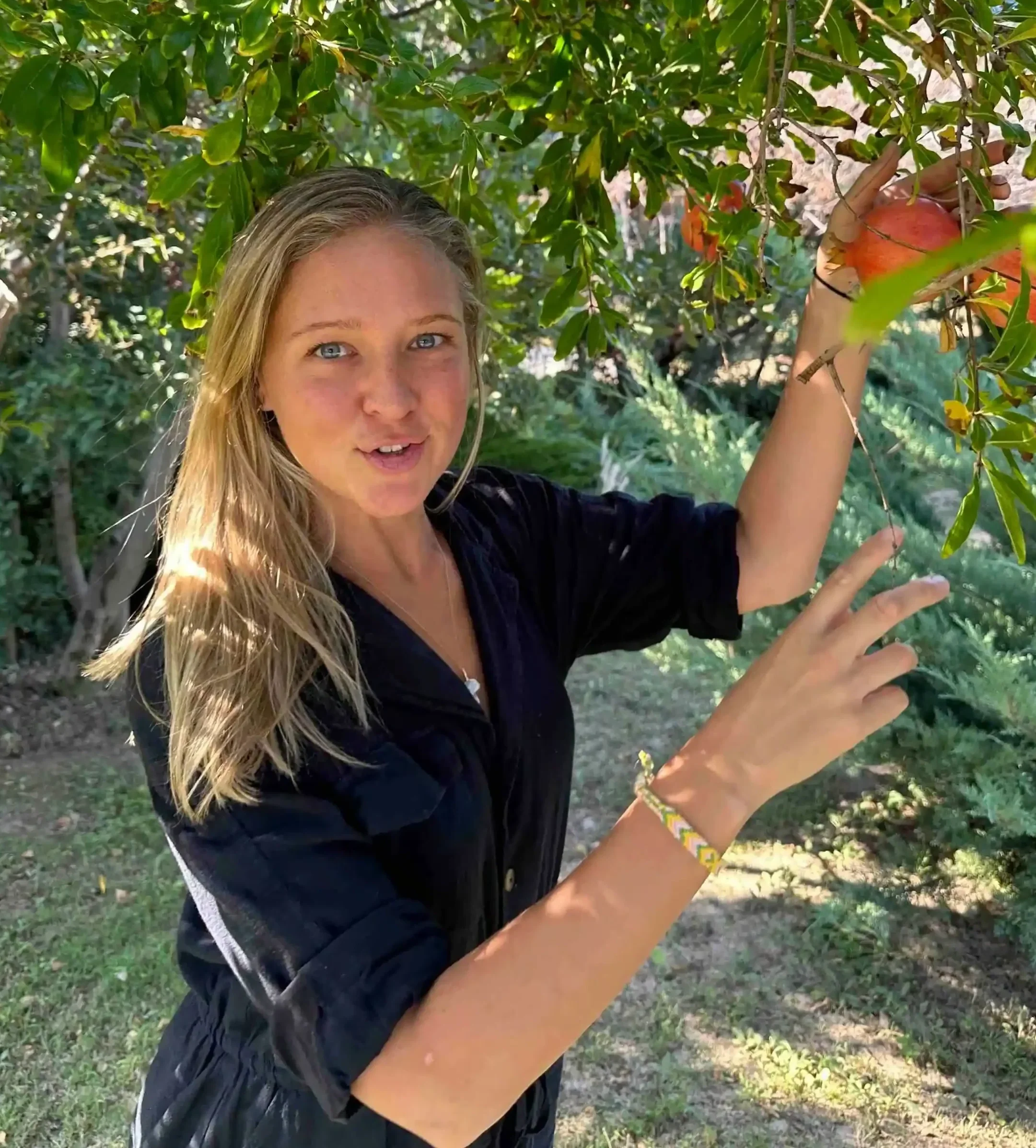
My name is Amanda. I am an Australian-born, London-based registered IBS nutritionist and nutritional therapist (BANT, CNHC).

I work primarily with people whose symptoms have not fully resolved despite diets, supplements, or testing, especially when digestion worsens during stress, anxiety, or emotional overwhelm.

color-3.png

When Gut Issues Start to Take Over

Living with stress-sensitive IBS can be exhausting. Frequent IBS flare-ups, urgency, discomfort or unpredictable digestion disrupt your day-to-day life. Restricting foods and anticipating flare-ups can keep both digestion and the nervous system on constant alert.

Many people move between doctors, tests, and diets, overwhelmed with information but without real clarity. Because digestion is treated in isolation, support offered is often limited to symptom management or medication.

Over time, gut issues begin to take over. You cancel plans, monitor every meal, gradually lose trust in your body, exhausted by a busy mind that never really switches off. It is not just your digestion that feels restricted, but your confidence, energy, and sense of freedom too. And for most people, this rarely resolves on its own.

If you want digestion to feel more predictable, food choices less stressful, and life easier again, lasting relief starts with seeing your gut as part of a bigger picture.

Making Sense of Your Symptoms

The gut is closely connected to the rest of your body. Digestion influences, and is influenced by, hormones, sleep, mood, energy levels, and daily habits.

In practice, this means looking at your diet and food choices, but it also considers:

• How your gut functions
• Your lifestyle
• Your sleep
• Your environment

As well as the internal systems that regulate how your body functions: your hormone health, immune system and your nervous system. When the nervous system remains under strain, digestion may struggle to settle even when diet changes are carefully followed.

When these factors are overlooked, gut issues often repeat, leaving digestion unpredictable and daily life disrupted, with symptoms becoming more persistent over time. In response, the body may become more vigilant and reactive. Digestion can start to fluctuate, with flare-ups appearing not only after certain foods, but also during periods of stress or pressure.

Stress does not cause everything, but it can change how sensitive and reactive digestion becomes. Through experience, I have found that lasting change happens when everything that influences digestion is looked at together. This includes the health of your microbiome, and how your body adapts to everyday demands.

If this is starting to make sense, the next step is understanding your specific pattern more clearly.

What Is Really Driving Your Symptoms?

Although my work is grounded in nutrition, the heart of my approach involves exploring the other factors that affect digestive health: sleep, stress, daily habits, and how supported your body is overall.

This short quiz explores your digestion, energy levels, stress patterns, and daily demands to help you understand what's really driving your symptoms and where your body needs the most attention.

This can help you identify whether stress, food, routine, or nervous system load may be contributing most to your symptoms.

2 minutes · no email required

color-3.png

What Support Can Look Like

There is rarely one single reason gut symptoms keep coming back.

When people choose support, work often involves personalised nutrition, supportive lifestyle and nervous system strategies, and when genuinely useful, functional testing to help make sense of your gut as part of a bigger picture.

For some, the first step is identifying triggers and giving symptoms space to calm down. For others, it is about repair, or reducing the daily load on your system, and making gentle, targeted changes as capacity builds.

By noticing patterns and making small, sensible adjustments, we work with how your body responds so your digestion can gradually settle.

Over time, this helps many people rebuild trust in their body and feel less overwhelmed by symptoms.

Nutritional Therapy

Personalised nutrition, functional medicine, and lifestyle guidance to identify triggers, support digestion, and restore balance to your body and microbiome.

Advanced Testing

Gut, blood, and hormone panels for deeper insight into what’s happening inside your body, helping reveal what needs targeted support.

Compassionate Inquiry

An integrative approach developed by Dr Gabor Maté that offers gentle emotional insight, supporting the body and nervous system.

Experience-Informed Care

A way of working that prioritises safety and connection, recognising how stress and past experiences shape how you feel and function today.

  • For many people with digestive issues, symptoms persist not just because of diet, but because the gut becomes more reactive over time, even to foods that once felt safe.

    My approach includes practical nutrition and lifestyle changes, as wells as support to ease gut reactivity.

    Load is the weight your body has been carrying, from stress, self-pressure, and the effort of coping. My work focuses on taking that weight off, so your body can soften.

    Ease is what emerges as your system settles, when pressure is reduced and there’s enough capacity to tolerate change.

    Results that last are built by reducing reactivity before pushing for change. When pressure is reduced, digestion can tolerate more, food choices feel less overwhelming, and improvements are easier to maintain. This leads to steadier symptoms and progress that fits into real life.

Dr Gabor Maté, whose Compassionate Inquiry approach informs Mind Body Biome gut health support.

Renowned Physician & Compassionate Inquiry Founder - Dr Gabor Maté

What You’ll Receive

This approach is designed to give you personalised nutrition support with clarity and steady guidance, and additional tools used if and when they are genuinely helpful. You can expect:

Clear insight into what is driving your symptoms

✔ Practical strategies to support your gut health day to day

✔ Ongoing support and regular check-ins, so you are not navigating this alone

✔ Structure to help you build sustainable, long-term habits

✔ Targeted supplements, when appropriate

✔ Advanced functional testing, if needed, with results explained simply and clearly

✔ A compassionate, experience-informed approach that brings depth and understanding to our work together

For my clients, this combination of nutritional expertise and support to help their system settle, often makes the biggest difference.

What This Level of Support Looks Like in Practice

  • Weekly sessions at the beginning, then fortnightly as appropriate
  • A minimum of 8 to 14 follow-up calls, plus an initial consultation
  • Approximately 7 to 15 hours of direct 1:1 support, depending on programme length
  • WhatsApp and email support between sessions
  • Living with ongoing digestive issues often places the nervous system into a constant state of vigilance.

    This can show up as heightened gut sensitivity, unpredictable reactions to food, and symptoms that persist even when nutrition is “right”.

    Over time, this protective state can make it harder for digestion to settle, even with supportive nutrition and lifestyle changes.

    While many practitioners recognise that stress and mood influence digestion, most approaches stop at basic stress-management tools.

    Integrating experience-informed care and Compassionate Inquiry allows these protective patterns to be explored gradually. This helps the nervous system come out of long-term protection mode, so it no longer stands in the way of digestive healing.

    Experience-informed care is not about reliving the past or finding something “wrong” with you. It simply recognises that the body adapts to what it lives through, and that healing is more likely when safety, choice, and pacing are prioritised.

    Somatic awareness tools offer an additional layer of support, helping you notice physical sensations as useful signals rather than symptoms to fight or override.

    Compassionate Inquiry then provides a gentle framework for exploring these responses with curiosity rather than judgement, and allowing tension to release naturally.

    By working with the whole picture, your digestion, nervous system, and how your body has adapted over time, we create the conditions for digestive healing. Nutritional and lifestyle changes can then be applied in a way that supports real stability, rather than short-term symptom control.

“Health begins in the gut - but healing often needs to begin in the nervous system.”

color-3.png
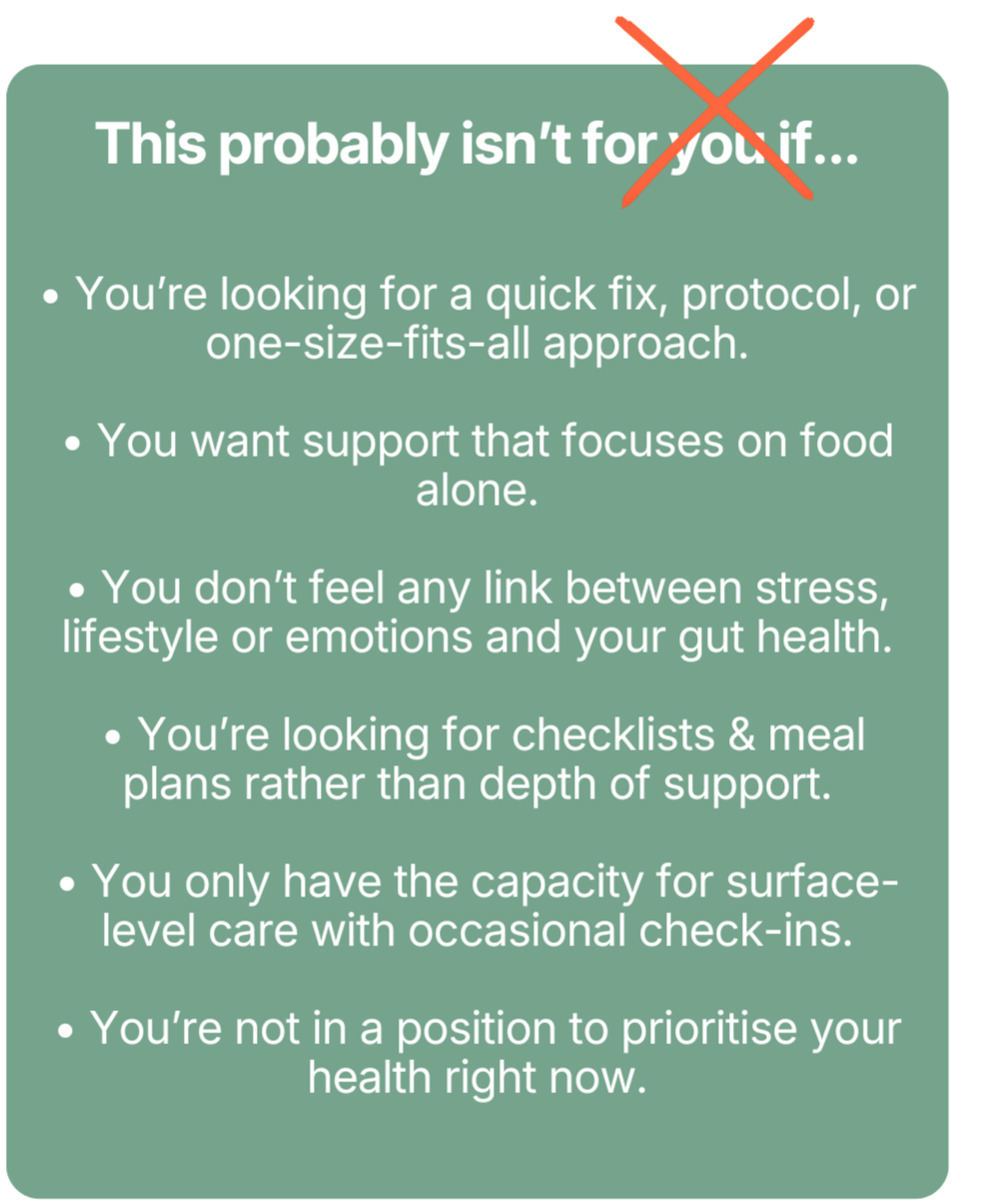
This approach is not for those looking for quick fixes or one-size-fits-all gut health solutions.

If you’ve been dealing with digestive issues for a while and want personalised support that looks beyond symptoms, this is the next step

Who I Work With

I support people with IBS, bloating, reflux, constipation and diarrhoea, particularly when symptoms worsen with stress, anxiety or nervous system overload.

While digestive health is my specialty, my training in nutritional therapy allows me to work across the wider functional medicine picture, including hormones, immune health, blood sugar regulation, nutrient status, and nervous system support.

Many of the people I work with have already tried the usual paths and are looking for something more tailored, and sustainable. My work is highly personalised, combining nutrition and lifestyle support, with the option to gently explore deeper layers of healing if that feels helpful.

My role is to create a path that feels clear, simple, and manageable, while also offering tools to reduce stress and tension in the body. Together, we work towards restoring internal balance and creating the conditions for long-term gut health and resilience.

My work is trauma-informed and paced gently, particularly for sensitive or overwhelmed systems.

color-3.png

Testimonials - What My Clients Say

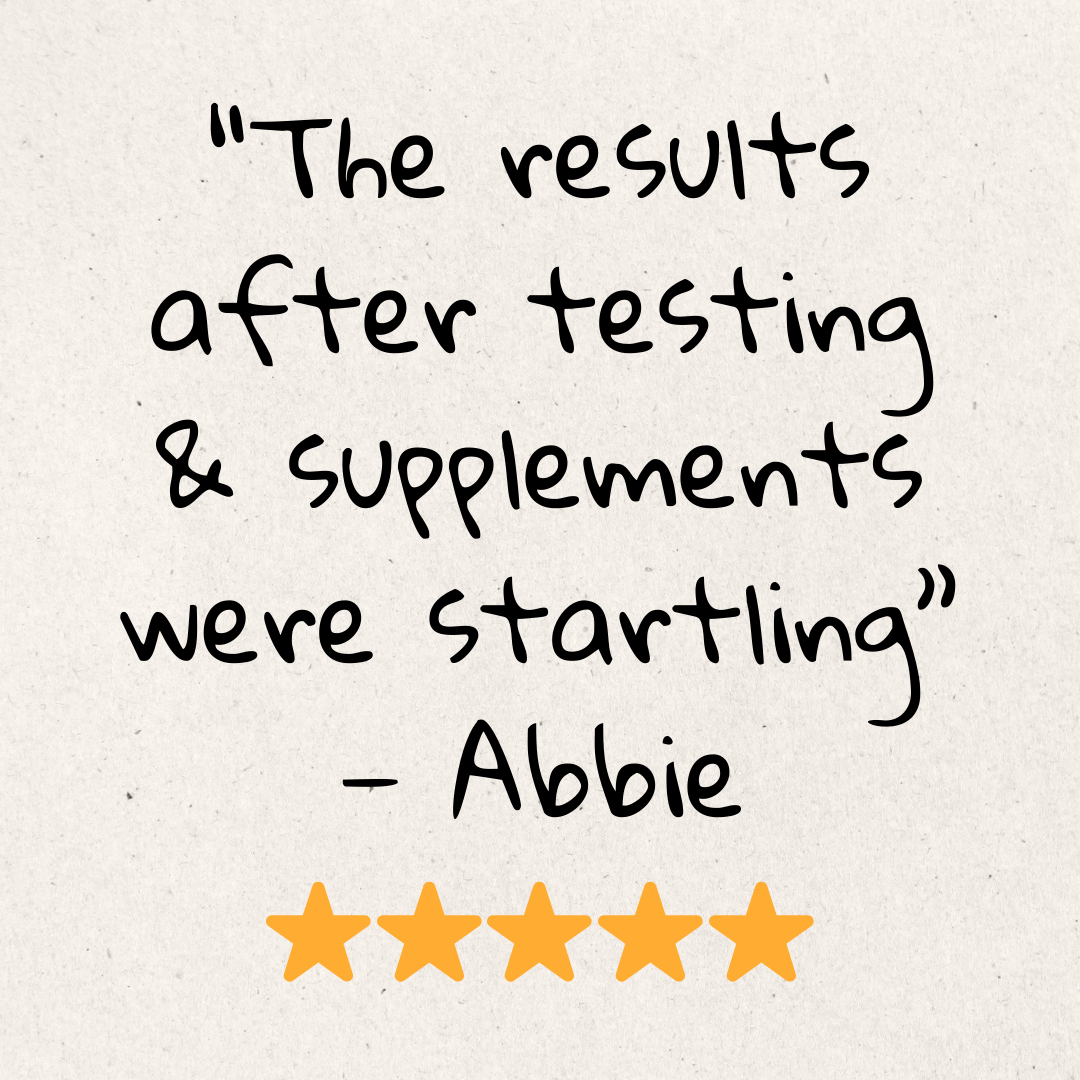
I worked with Amanda for six months and the difference has been remarkable. Her tailored eating plan, supplement support and careful use of testing gave me insights I’d never had before. The results were genuinely startling” - Manny ⭐⭐⭐⭐⭐

Amanda's guidance has been both practical and deeply supportive. I’ve seen genuine improvements in my energy, digestion and overall wellbeing, and for the first time nutrition feels simple, sustainable and actually enjoyable” - Peter ⭐⭐⭐⭐⭐

My GP had struggled for years to get me a diagnosis or effective treatment. Amanda took the time to listen to my history and issues and within weeks, I saw a massive difference” - Martina ⭐⭐⭐⭐⭐

What I love most about Amanda is her non judgmental approach, she provides me a safe space where I feel confident enough to open up to her and she compassionately takes the time to listen and understand anything I share” - Zahraa ⭐⭐⭐⭐⭐


What They Experience

Across my work, clients often describe similar shifts. As clarity increases, their symptoms begin to make more sense, and they notice changes both physically and emotionally.

Many people report:

✔ Less bloating, discomfort, and fewer flare-ups

✔ Digestion that feels easier and more predictable

✔ Steadier energy and clearer focus through the day

✔ A calmer, more settled nervous system

✔ Feeling more relaxed and confident around food

✔ Greater ease in social situations

✔ More freedom to live life without constant restriction

Client success image encouraging visitors to book a free gut health call for gut health support.
color-3.png

Quick Q & A

  • It’s completely understandable. Many people with long-standing gut symptoms feel they’ve tried everything, every diet, every supplement, every specialist, yet still end up stuck in the same cycle of flare-ups and uncertainty. After years of being bounced between appointments without clear answers, it’s normal to feel discouraged.

    My role is to help find the missing pieces of the puzzle.
    As a registered Nutritional Therapist, I have access to advanced testing beyond what’s typically offered by a GP, which can reveal things often missed or dismissed in standard care. This work isn’t about blanket solutions, it’s about ongoing support, asking the right questions and understanding what’s truly driving your gut symptoms.

    It’s far more than a generic meal plan or a ten-minute appointment; meaningful change takes time, patience, curiosity and compassion.

  • The discovery call is a relaxed space to talk through what’s been happening for you, your symptoms, challenges and what you’ve already tried. It’s less about me and more about understanding you, so we can begin to uncover what may be driving your gut symptoms or holding you back from feeling better.

    If it’s helpful, I’ll offer some insight into where you’re at right now. From there, I’ll explain how I work, answer any questions you have, and together we’ll see whether it feels like the right fit. No pressure, just an open conversation about what could help you move forward.

  • Not always.
    We begin by understanding your symptoms, health history and goals before deciding whether testing is necessary. Functional tests can offer deeper insight into gut health when the picture isn’t yet clear, but we only use them if they will genuinely support your progress, never as a requirement.

  • Q1: What is the difference between a gut health dietitian and a gut health nutritionist?
    A: Many people search for a gut health dietitian or gut health nutritionist when looking for support with bloating, reflux or ongoing digestive symptoms. In the UK, "dietitian" is a legally protected title, while "nutritionist" and "nutritional therapist" are regulated through professional bodies such as BANT and CNHC. Dietitians typically work in medical settings and focus on clinical testing, diagnosis and medical nutrition interventions.

    A gut health nutritionist takes a more holistic approach, using personalised nutrition, supplementation, lifestyle medicine and functional testing to address the root causes of digestive issues. As a registered Nutritionist and Nutritional Therapist (BANT, CNHC), my work combines these tools to support long-term gut health.

    Q2: What is a gut health nutritionist, and how can they help with bloating or reflux?
    A: A gut health nutritionist is a registered professional who specialises in digestive health. They support people with bloating, reflux, constipation and other gut symptoms by identifying food triggers, improving digestion and restoring microbiome balance.

    As a qualified digestive health nutritionist, I use evidence-based strategies and functional testing when appropriate to understand what is driving your symptoms. A good gut health specialist looks beyond a simple meal plan and takes time to understand your history, lifestyle, stress patterns and the gut brain connection. This personalised and ongoing support is what makes long-term improvement possible.

    Q3: Why work with a nutritionist specialising in gut health compared to, or alongside, my GP?
    A: Your GP plays an important role, especially in ruling out serious conditions. However, GP appointments are often brief and focused on symptom management. A gut health nutritionist has the time to look deeper into your history, lifestyle, diet and stress patterns to understand what is driving your digestive symptoms.

    While a GP may focus on diagnosis or medication, a gut health specialist provides personalised and holistic support that addresses underlying causes. The two approaches work well together. Medical care ensures safety, while nutrition therapy provides the depth needed for lasting digestive change.

    Q4: Can I manage bloating or reflux on my own, or do I need a gut health nutritionist?
    A: Many people try to manage gut symptoms on their own by changing their diet or using supplements, but results are often short-lived or inconsistent. A gut health nutritionist brings expertise in identifying root causes, using science-based strategies and applying functional testing when helpful.

    They also provide a personalised plan and ongoing support that adapts to your lifestyle, stress patterns and changing symptoms. This type of guidance addresses diet, microbiome balance, the gut brain connection and nervous system support. These are key factors in achieving long-term digestive relief.

    Q5: Do I need to have in-person consultations?
    A: Not at all. Most clients work with me online and find it easier to stay consistent that way. As an online gut health nutritionist, I offer the same depth of support that you would receive in person.

    Whether you are looking for a London gut health nutritionist or prefer to work from home, the process is the same. We explore your diet, microbiome and nervous system to understand what is driving your symptoms. You receive a personalised plan, targeted nutrition for gut repair and ongoing guidance, all with the convenience and comfort of home.

    Q6: Why does stress or anxiety affect digestion?
    A: The gut and nervous system are closely connected. When the body feels under pressure, digestion can slow, speed up or become more sensitive. Supporting both together often helps symptoms settle more sustainably.


If This Resonates.

Your gut does not need another quick fix.

It requires a personalised approach built around you, with the right tools, and steady guidance that looks at more than diet alone. This includes lifestyle factors, microbiome health, and how the nervous system and emotional strain affect the body’s ability to heal.

If you are tired of short-term solutions, or of trying to figure this out on your own while symptoms continue to interrupt life, it may be time to explore what real support feels like.

If what you have read so far resonates, the next step is to book a free call.

This conversation is for you if you are ready to move beyond simply managing symptoms and start understanding what your body has been asking for.

Freedom and confidence around food and digestion with the Mind Body Biome gut health approach.
color-3.png

What Happens Next:

Once I receive your enquiry, I’ll be in touch to arrange your Stress-Induced IBS Clarity Call.

The call is a structured, supportive conversation to understand your current challenges and what you are hoping to change.

We’ll talk through your symptoms and what’s been keeping you stuck.

You’ll leave with clear next steps – whether we decide to work together or not.

If you’d like to learn more about me before booking a call, you’re welcome to read about my background and the inspiration behind my work, as well as explore detailed client testimonials.

amanda@amandacallenberg.com | +447984668090 | IG: @amandacallenberg