
Compassionate Inquiry and the Foundations of My Work
How I Learned to Understand the Body Differently
For a long time, healing has focused primarily on identifying a problem to solve.
If something wasn’t working, we looked for the broken part, the faulty mechanism, or the missing nutrient. This approach brought huge advances in emergency care and short-term illness. But when it came to ongoing symptoms such as chronic pain, fatigue, gut problems, anxiety, and conditions that didn’t fully settle, something fundamental was often missing.
Over time, a quiet shift began to take place.
Not toward fixing and control, but toward understanding.
A crucial voice in bringing this understanding together was Gabor Maté. What made his work so influential was not only what he contributed himself, but how he connected ideas that already existed across medicine, psychology, neuroscience, and lived experience into one coherent way of making sense of human health.
In books such as When the Body Says No and The Myth of Normal, Maté articulated a central insight: that illness is often not a defect, but an adaptation, a meaningful response to long-term stress and the conditions of modern life. This opened the door to a far more compassionate and realistic understanding of the body.

Dr Gabor Maté, MD, physician - Founder of Compassionate Inquiry & NYT bestselling author
One of the key strands Maté helped bring into the mainstream was the understanding that the body reflects experience over time. As explored in The Body Keeps the Score by Bessel van der Kolk, experiences that overwhelm our capacity to cope do not simply disappear, but can influence how the nervous system and body function.
From this perspective, symptoms stopped looking like random faults and began to look more like signs of how the body had learned to adapt.
Another strand came from Internal Family Systems (IFS), developed by Richard Schwartz, which offered a deeply humane reframe: symptoms are not enemies, but protective responses. Pain, tension, fatigue, and digestive symptoms were no longer seen as failures, but as adaptations.
This shift created a different and powerful starting point for how long-standing symptoms could be understood.

Dr Peter A. Levine, PhD - Founder of Somatic Experiencing®
Nervous system research then provided the physiological explanation for why these ideas mattered so much.
Through the work of Stephen Porges (Polyvagal Theory) and Peter Levine (Somatic Experiencing), it became clearer that the body cannot easily repair itself while it feels under threat. Digestion, immunity, hormones, and tissue repair all depend on the nervous system sensing a degree of safety.
This helped explain why symptoms often worsen under pressure, why aggressive approaches can backfire, and why rest, pacing, and reducing overall load are so important in recovery.
At the same time, relational psychology added another important layer. Thinkers such as Donald Winnicott and Carl Rogers showed that change often happens not through force or correction, but through being met, listened to, supported, and not rushed.
Bodies respond differently when they feel safe.
Complementing this understanding, gut–brain research allowed these ideas to be applied directly to digestion.
The work of Michael Gershon and Emeran Mayer, including books such as The Mind-Gut Connection, showed that the gut is not separate from the nervous system, but one of its most sensitive expressions. Digestive symptoms can therefore be influenced not only by food, but also by stress, immune activity, safety, and overall nervous system balance.
Food still matters deeply. But it sits within a much bigger picture.
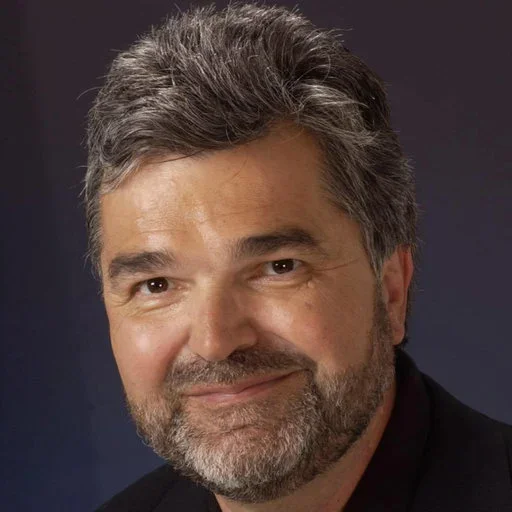
Dr Emeran Mayer, MD, PhD - author of The Mind–Gut Connection
What Gabor Maté ultimately did was bring these ideas together into what is now known as Compassionate Inquiry (CI).
CI is not a technique, but a way of understanding. It views symptoms as intelligent adaptations, and centres curiosity, safety, and context rather than judgement, or forced intervention.
Taken together, this body of work has fundamentally changed how healing is understood. It becomes less about fixing something broken or finding the perfect protocol, and more about restoring stability, reducing strain, and working with the body rather than against it.

From this place, we stop trying to override symptoms and start listening to them.
We move away from quick fixes and toward support that is paced, personalised, and grounded in how the body actually functions.
Food, digestion, the nervous system, and daily life are no longer treated as separate problems, but as parts of the same conversation.
This is the ground my work now stands on, and the place from which I support people in developing a steadier, more trusting relationship with their bodies. A path toward health that feels both evidence-based and deeply human.